Longer Bio
Background
I was born in Czechoslovakia in the mid-1980s: the surveillance state was weakening, but travel restrictions in the one-party dictatorship were still in place. People needed to request an exit visa when they wished to travel abroad, and they had to promise to return. (Because you were, naturally, an enemy or a saboteur if you were not content and proud in the "communist paradise").
By 1989 the defunct ideology, which was partly imposed by the USSR but also tragically home-grown, was finally discredited. The Velvet Divorce followed four years later, so the country listed on my birth certificate no longer exists. For me, witnessing Slovakia’s necessary transformation — but also the fragility of democracy and economic reforms in the face of bad ideas — was an experience more formative than the formal education I would receive.
It’s because of those experiences that I consider myself fortunate to have grown up in a post-communist society. But the flip side of the timing of the fall of the Iron Curtain is that my older family members were unlucky. When my grandfather renounced his Communist Party membership in the 1960s (the occupying Soviet Army had just killed his sister), my mother was nearly barred from studying at a university.
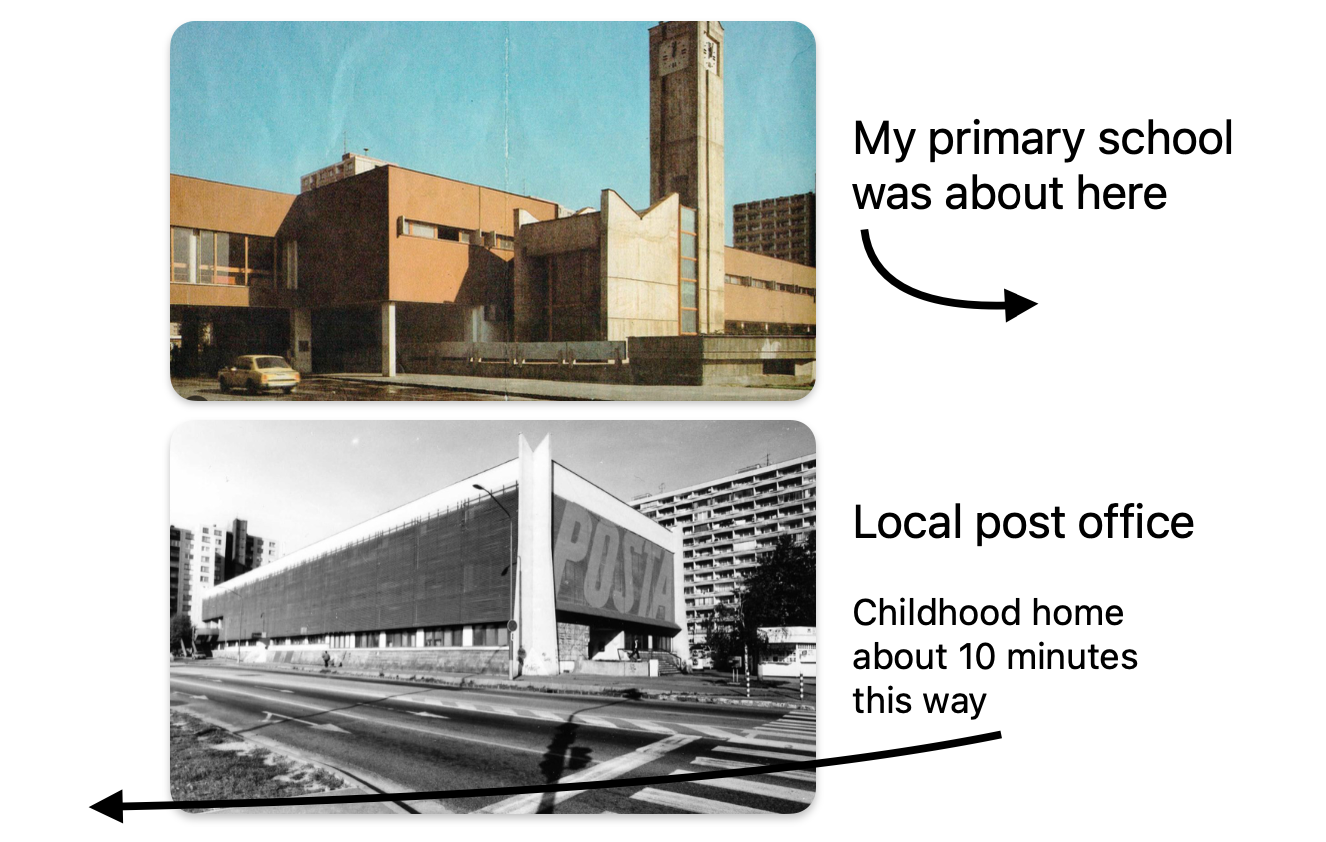
So, I come from a line of people who lived cautiously, always aware that friends could be regime informants. Having learned to look over their shoulders, people would lower their voices whenever politics came up. The inability to trust neighbors is one sad and persisting legacy of the life under the shadow of communism.[1]
Crossing borders
Without telling anyone at home, I applied to study at a bilingual French lycée as a teenager, spent a few years there and then — with the soft power of anglophone countries clearly working on me — went on to apply to British and American universities. At Harvard, I watched Bush fumble his response to the global financial crisis and continued to be fascinated by the extent to which economic outcomes depended on politics. A few days after graduating, Daron Acemoglu, David Laibson, and John List hired me as a research assistant. While waiting for my visa, I hung my hat at a central bank.
My good fortune continued when I was hired by the think tank which you may know as the birthplace of the Washington Consensus, the Peterson Institute for International Economics. (But did you know it also published Dani Rodrik’s thoughtful pushback, Has Globalization Gone Too Far?) I found D.C. to be a place where introverts get a shot, learned from people who truly cared about policy, and then of course... One fabulist had gamed the information ecosystem to gain unlimited free media and insulted his way to the White House.
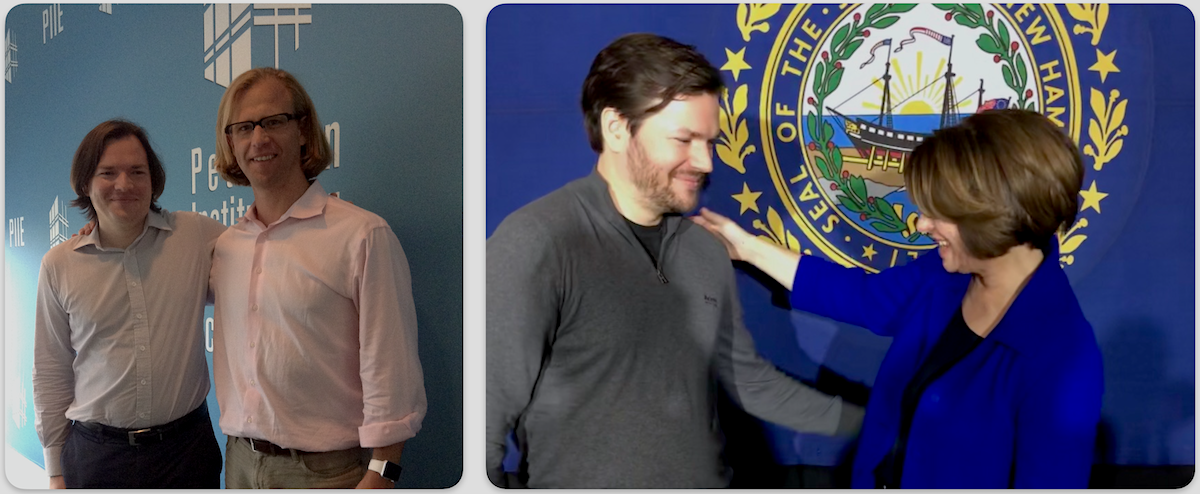
I bought some storage space for my belongings in Washington, and headed to NYU to try to do some systematic research about how digital technology affects the way politics gets done. With the help of advisers and colleagues, I wrote papers about echo chambers, Russian trolls, and other topics, and received a PhD (finishing my dissertation during a pandemic). An opportunity to move to post-Merkel Germany to work at the Technical University of Munich came up, and I joined the digital governance research group, taught courses at the public school within TUM, and got several studies about social media dysfunctions published.
Now, despite countless problems with the existing information environment, I have to reject epistemic nihilism. (Eastern Europe did survive four decades of nasty propaganda, remember?) I just don’t believe we now live in a post-truth era. Humans have the intellectual software to handle the digital age, and I hope that my forthcoming work will show you that there is a better way to think about the problems of contemporary politics.
The story of how Stasi agents tried to recruit the young Angela Merkel is a reminder that most people, not just the extraordinary ones, were put in impossible moral situations. Refusing to collaborate with the regime often required creativity, luck, or small acts of subversion. Merkel's clever response to the officers, insisting she was unable to keep secrets (see p. 29 in Kati Marton’s The Chancellor), is just one example. But for many, the choice was far from clear-cut: maintaining one's independence or integrity often came at a personal cost, and sometimes it wasn't even possible. ↩︎